
Providing good science advice to deputies, ministers and Cabinet comes not from a single official or office, but from a network of science advisors within governmental departments and agencies who are formally engaged at critical steps in a process. As a result, in 2018 the Office of the Chief Science Advisor announced it would seek to establish a network of departmental science advisors (DSA).
The DSA Network is chaired by the Chief Science Advisor and typically meets on a monthly basis to:
- Collaborate or champion multi-departmental initiatives identified by the DSA Network;
- Act as peer reviewers for initiatives;
- Promote the use of science-based evidence to inform policy development, practice and evaluation;
- Share best practices to support each other’s respective mandates;
- Act as a conduit for information and advice from the scientific and research communities to administration and government, individually or through the coordination of expert panels or bilaterals;
- Promote a co-ordinated approach to science advice to the government; and
- Collectively stay abreast of activities and advice streams across government.
With diverse areas of expertise to share and draw from, members are building a robust advisory function that will encourage collaboration across multiple sectors as the network continues to grow in the coming months and years.
Departmental Science Advisors Network biographies
- Dean Haslip, Vice-President and Chief Science Officer, Technical Support Branch, Canadian Nuclear Safety Commission (CNSC)
- David Hik, Chief Scientist and Executive Director – Programs, Polar Knowledge Canada (POLAR)
- Christian Lange, Science Advisor and Acting Director General, Space Science and Technology, Canadian Space Agency (CSA)
- Shawn Marshall, Senior Research Scientist and Chief Science Officer, Environment and Climate Change Canada (ECCC)
- Joel Martin, Chief Science Officer and Chief Digital Research Officer, National Research Council Canada (NRC)
- Ranjana Sharma, Chief Scientist, Natural Resources Canada (NRCan)
- Valerie Taylor, Departmental Science Advisor, Health Canada (HC)
- Sarah Viehbeck, Chief Science Officer, Public Health Agency of Canada (PHAC)
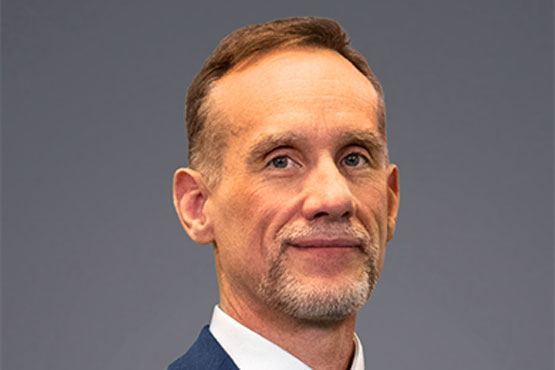
Dean Haslip
Vice-President, Technical Support Branch, and Chief Science Officer
Canadian Nuclear Safety Commission (CNSC)
Education
- Ph.D. in nuclear structure physics
Career
- Extensive background in energy efficiency and nuclear physics.
- He previously directed the Office of Energy Efficiency at Natural Resources Canada, where he developed impactful policies like the Canada Green Buildings Strategy and oversaw critical energy regulations.
- His tenure at CanmetENERGY-Ottawa, which involved directing research in various renewable energy technologies, further emphasizes his commitment to advancing Canada’s net-zero objectives.
- Additionally, his involvement in the multinational Mission Innovation initiative showcases his dedication to collaborative efforts in clean energy.
- Dean's public service career, initiated at Defence Research and Development Canada, allowed him to rise through the ranks from research scientist to key leadership roles, emphasizing his expertise in radiological defence and operational research.
- His academic background, which includes contributions to the Sudbury Neutrino Observatory project, underlines his profound knowledge and passion for scientific advancement.

David Hik
Chief Scientist and Executive Director – Programs
Polar Knowledge Canada (POLAR)
Education
- B.Sc., Biology, Queen’s University (1986)
- M.Sc., Botany, University of Toronto (1988)
- Ph.D., Zoology, University of British Columbia (1994)
- Postdoctoral Fellow, Commonwealth Scientific and Industrial Research Organization (CSIRO), Canberra
Career
- Appointed as Chief Scientist and Executive Director (Programs) at Polar Knowledge Canada in 2021.
- Professor in the Department of Biological Sciences at Simon Fraser University.
- Ecologist with a specialization in species interactions and the responses of cold environments to disturbance and climate change.
- Responsible for leading the implementation and delivery of POLAR’s Science and Technology and Knowledge Mobilization programs, and their co-development with Indigenous partners and rights-holders across northern Canada.
- Provide strategic direction that promotes government-wide cooperation and coordination of Arctic and polar research while aligning with and supporting Government of Canada priorities.
- Served previously as Executive Director of the Canadian International Polar Year Secretariat, President of the International Arctic Science Committee (IASC) and member of Board of the Directors of Polar Knowledge Canada and the Arctic Institute of Community-based Research.
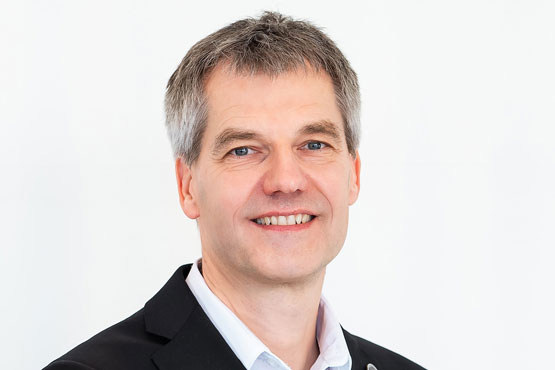
Christian Lange
Science Advisor and Acting Director General, Space Science and Technology
Canadian Space Agency (CSA)
Education
- Ph.D. in Mechanical Engineering, Graz University of Technology (Graz, Austria)
- Bachelor’s and Master’s in Engineering, University of Rostock (Rostock, Germany)
Career
- Dr. Christian Lange is the Chief Scientist and Acting Director General of the Space Science and Technology Directorate at the Canadian Space Agency (CSA) in Longueuil, Quebec. In this role, he leads the Agency’s efforts to define collaborative space research and development initiatives and to identify science and technology priorities. He also provides leadership for the CSA’s capacity-building mandate through the Space Capacity Development Program and the Canada-ESA Cooperation Agreement.
- Prior to this role, Dr. Lange served as Executive Director of the CSA’s Lunar Exploration Program, where he provided executive and scientific leadership for the planning, development, and delivery of Canada’s lunar surface initiatives, with a particular focus on the Lunar Utility Vehicle and Deep Space Food Production.
- Previously, he served as Director of the CSA’s Space Exploration Planning, Coordination and Advanced Concepts Division, where he led the planning of Canada’s participation in future national and international space exploration missions.
- He began his career as a postdoctoral fellow involved in the CSA’s Space Technology Research Program, focusing on multibody dynamics simulations. He then worked for several years as a Research Scientist in Robotics, before transitioning to strategic technology development and exploration planning.
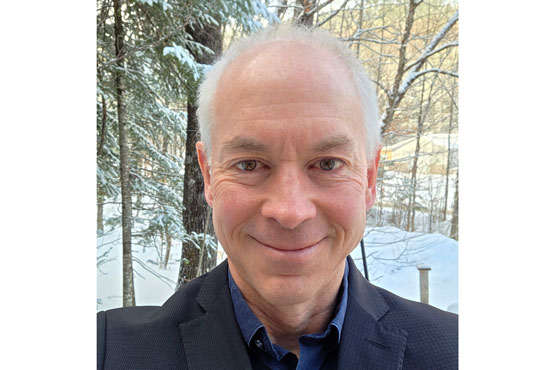
Shawn Marshall
Senior Research Scientist and Chief Science Officer
Environment and Climate Change Canada (ECCC)
Education
- B.A.Sc., Engineering Science from the University of Toronto (1991)
- Ph.D., Geophysics and Astronomy, the University of British Columbia (1996)
Career
- Dr. Shawn Marshall is a senior Research Scientist and Chief Science Officer in the Science and Technology Branch at ECCC, where he contributes to the management and strategic vision for the Department’s research directions, priorities, and partnerships.
- He took on this role following a term as the Departmental Science Advisor for ECCC from 2019-2023, building from his academic career as a Professor and Canada Research Chair in Climate Change at the University of Calgary.
- Dr. Marshall’s research expertise is in Earth system science and cryosphere-climate processes, where he studies glacier and ice sheet response to climate change in western and Arctic Canada, Iceland, and Greenland.
- He was a long-time member of the Canadian Institute for Advanced Research (CIfAR) Earth System Evolution Program and contributes to numerous international science initiatives, including expert contributions to Intergovernmental Panel on Climate Change (IPCC) and Arctic Monitoring and Assessment Program (AMAP) reports, service as the Chair of the World Meteorological Organization (WMO) Global Cryosphere Watch program, as the Canadian representative and past Chair of the International Arctic Science Committee (IASC) Cryosphere Working Group, and on the science steering committees of the Mountain Research Initiative and the U.S. National Center for Atmospheric Research (NCAR) Community Earth System Modelling program.
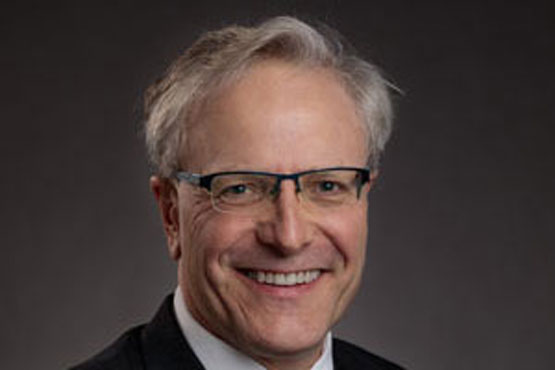
Joel Martin
Chief Science Officer and Chief Digital Research Officer
National Research Council Canada (NRC)
Education
- B.A., Cognitive Psychology, University of Manitoba (1984)
- M.A., Cognitive Psychology, University of Manitoba (1986)
- M.Sc., Computer Science, Ga Institute of Technology (1987)
- Ph.D., Computer Science, Ga Institute of Technology (1992)
Career
- Appointed as Chief Science Officer in 2022 and Chief Digital Research Officer (CDRO) at the National Research Council in 2021.
- Is a Computer Scientist specializing in artificial intelligence and the processing of natural languages for decision making, text analytics, health monitoring, and multilingual processing.
- As CDRO, he is now responsible for leading the digital science transformation for the NRC, particularly in the use of recent algorithms to accelerate discovery and design.
- Created NRC’s targeted research program in AI for Design which develops and provides AI technologies and capabilities to accelerate discovery, R&D, and innovation processes. With university collaborators, the program advances algorithms, methods and datasets to assist engineers, researchers and scientists.
- Led multiple large-scale technology transfer projects to industry and other government departments.
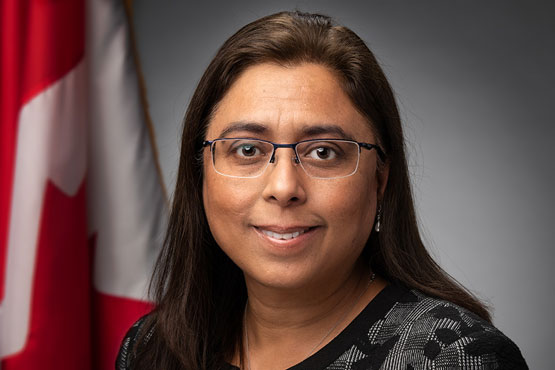
Ranjana Sharma
Chief Scientist
Natural Resources Canada (NRCan)
Education
- Ph.D. in Plant Molecular Physiology
Career
- Appointed as the Chief Scientist at NRCan in 2022.
- As Chief Scientist, Dr. Sharma is responsible for providing corporate science leadership, oversight and strategic policy advice on all aspects of cross-cutting science priorities, policies, capacity and management at NRCan.
- Dr. Sharma has over 20 years of science research, development, and management experience, with science leadership roles at multiple Government of Canada departments and in academia.
- Prior to her role as a Chief Scientist, Dr. Sharma was a Director at Agriculture and Agri-Food Canada, where she managed regional agriculture and led the Clean Technologies Portfolio, and subsequently, a Senior Director at Public Services and Procurement Canada, where she provided science policy advice and guidance for the Laboratories Canada program and led external engagements.
- A champion for Inclusion, Diversity, Equity and Accessibility, Dr. Sharma is passionate about supporting youth and women in science and technology spaces.

Valerie Taylor
Departmental Science Advisor
Health Canada (HC)
Education
- Bachelors of Medical Science and graduated from medical school from the Memorial University of Newfoundland.
- Residency training in Psychiatry at McMaster University in Hamilton, Ontario
- Ph.D. in Neuroscience and post-doctoral fellowship at McMaster University in Hamilton, Ontario
- She has also obtained an Improving and Driving Excellence across Sectors (IDEAS) Ontario certification in Quality Improvement, a certificate from the Mental Health Commission of Canada for their Promotion of Activated Research and Knowledge (SPARK) Training Program, a Rotman Advanced Health Leadership diploma and is completing studies on Behavioral Economics as part of Harvard Business School’s Executive Education program.
Career
- Appointed as the Departmental Science Advisor in 2024.
- Professor and the Chair of the Department of Psychiatry at the University of Calgary.
- Prior to coming to Calgary, Dr. Taylor was the chief of Psychiatry at Women’s College Hospital and the chief of Adult Health Services at the Center for Addiction and Mental Health in Toronto.
- Her academic focus has been in the area of medical psychiatry and translational research, with an interest in translating science to inform policy.
- She has approximately 180 research publications and in the last 5 years has received 10 million dollars in PI/co-PI funding.
- She is the recipient of numerous awards and in 2020 she was named one of the top 100 most powerful women in STEM in Canada.
- She has a keen interest in board governance and has been a director at KidsHelpPhone, Brain Canada and Obesity Canada.

Sarah Viehbeck
Chief Science Officer
Public Health Agency of Canada (PHAC)
Education
- Hons B.A., Community Health Sciences, Brock University
- Certificate from the International School on Research Impact Assessment
- M.Sc., Health Studies and Gerontology, University of Waterloo
- Ph.D., Health Studies and Gerontology, University of Waterloo
Career
- Appointed as the Chief Science Officer (2022) and reports directly to the President of PHAC.
- In this role, Dr. Viehbeck is responsible for providing strategic leadership to oversee and support science excellence, science-policy integration and science promotion, as well as re-energizing the scientific vision and capacity toward “Strengthening the Voice of Science” across the Agency.
- Prior to this, she was the Associate Vice-President Research - Evidence Integration at CIHR. In this role, Dr. Viehbeck was responsible for all science-related strategy and policy development. There, she led the design of a comprehensive suite of programs and initiatives to support CIHR’s mandate, with a priority focus on equity, diversity and inclusion as well as growing and maintaining a strong and sustainable Canadian health research workforce. She also played a key leadership role in the Agency’s COVID-19 response.
- Dr. Viehbeck is a former adjunct faculty member at University of Waterloo’s School of Public Health and Health Systems and the University of Ottawa’s Interdisciplinary School of Health Sciences and former Board member of the National Collaborating Centre for Determinants of Health.
- She has been recognized for her contributions by the Senior Women Academic Administrators of Canada, the Ontario Tobacco Research Unit, the Canadian Public Health Association, and through a CIHR President’s Award of Excellence.