
July 23, 2024
Chemical, biological, radiological, nuclear, and explosive (CBRNE) threats are constantly evolving. To be able to tackle them efficiently and effectively, it’s important to coordinate efforts with allies and across government. To that end, Defence Research and Development Canada’s (DRDC) Centre for Security Science (CSS) is supporting Canada’s National CBRNE Response Team (CBRNE NRT).
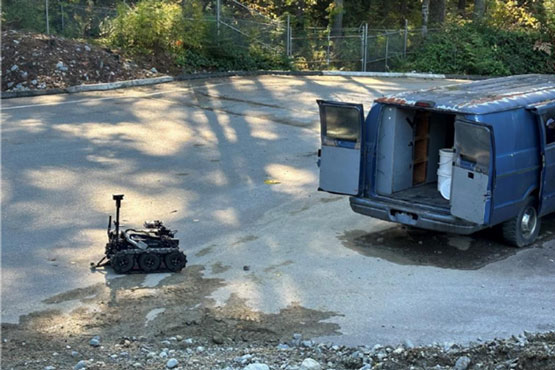
An explosives disarming robot searches a staged open van with hazardous materials.
“Canada’s National Response Team is a highly specialized team with expertise in investigating and gathering evidence in the event of CBRNE incidents. We do our part to support them by conducting research to establish best practices on the scientific processes behind their work,” says Dr. Lorne Erhardt, defence scientist at DRDC CSS.
DRDC CSS supports the NRT through many means, from funding new equipment to overseeing whole-of-government activities to improve processes, such as tabletop and live-play exercises. One example includes Exercise DYNAMIC RESPONSE, a coordinated live-play exercise of a simulated chemical incident. Organized with Transport Canada, this training scenario staged a hazardous material train derailment to test the interoperability between municipal first responders, Transport Canada’s emergency response assistance plans, and additional federal resources.
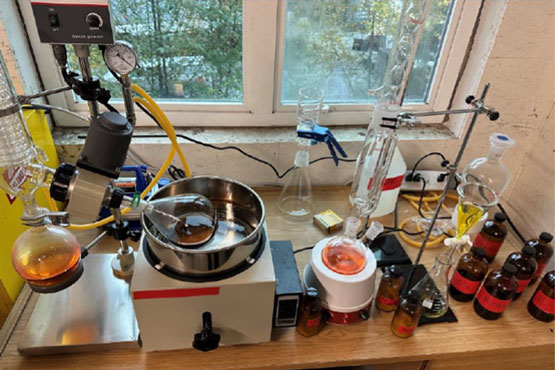
Chemicals discovered at a staged base of operations.
The training scenario took place over the course of four days and put communication between different levels of emergency responders to the test. Using intel discovered at the scene, first responders had to investigate, assess, and escalate as appropriate, and ultimately discovered the perpetrator’s base of operations. When evidence of suspected terrorist activity was found, the CBRNE NRT was informed and took the lead on securing the scene.
The CBRNE NRT, which is made up of several federal agencies like the Royal Canadian Mounted Police, the Public Health Agency of Canada, the Department of National Defence and more, are Canada’s emergency responders for CBRNE incidents that are potentially linked to terrorist or suspected terrorist activity. These typically involve the use of devices that can cause damage or injury over a large area, for example poisonous gases or explosives.

A staged hazardous material train derailment.
The NRT looks for trace evidence and collects samples to determine if a chemical, biological, radiological or nuclear weapon of mass destruction has been used. The team can also be deployed to major events for immediate, on-site analysis of suspicious packages, attacks, or unexpected incidents. While they conduct activity on the ground, the NRT relies on scientific support from departments across government.
This exercise provided an opportunity to identify and fill gaps in the handover process between responders and Canada’s CBRNE NRT, enhancing our capabilities to manage CBRNE threats in the future.