
January 9, 2026
It’s invisible, odourless and tasteless. And even though it’s natural, it can be a health danger inside of homes and buildings. So, what is it?
Radon is a radioactive, naturally occurring gas that comes from the breakdown of uranium in soil and rock. We don’t have to worry about exposure outdoors since it gets diluted in the outdoor air. However, indoors is a different story.
Radon can build up to dangerous levels when it enters into homes from the ground. In fact, it’s the leading cause of lung cancer in non-smokers and is linked to the deaths of more than 3,000 Canadians each year. That is why Health Canada is working diligently to educate Canadians and stakeholders on the health risks of radon.
The good news is there are ways to reduce the risk and potential exposure to radon. The first thing to do is test for radon. If the result is above the Canadian guideline of 200 Bq/m3, it’s important to hire a certified radon professional to determine next steps.
Health Canada, in collaboration with key stakeholder partners, has been working to make it easier to reduce radon levels in homes and buildings across the country. Together, they have developed two new National Standards: Radon Control Options for New Buildings and Radon Mitigation Options for Existing Buildings. These standards provide practical guidance for builders, engineers, and homeowners to lower radon levels, whether they’re constructing a new home or upgrading an older one.
A shared vision for healthy homes
One of the main drivers that helped bring these new standards to fruition was a collective determination to lower radon levels in both new and existing homes. A committee of 30 experts worked together as a panel to develop standards that were scientifically sound and easy to implement.
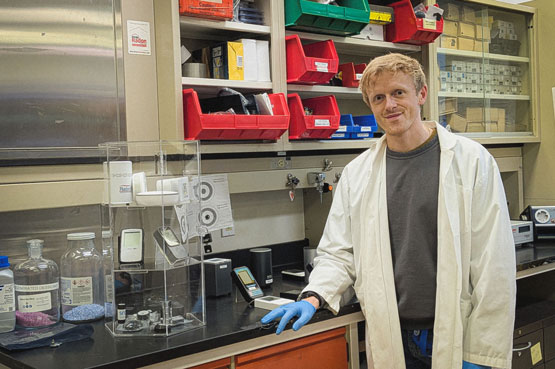
Robert Stainforth, Radiation Coordination Specialist with Health Canada and co-chair of the committee
Robert Stainforth, Radiation Coordination Specialist with Health Canada and co-chair of the committee, helped lead committee discussions to guide their work. They leaned on the expertise and research of building scientists and industry specialists including radon professionals, builders, engineers and architects.
“This desire was driven by a wealth of knowledge from all corners of the construction and radon industry in Canada,” explains Robert. “This knowledge was invaluable to the committee in creating the standards.”
“Following both internal and public reviews,” Robert recalled, “I produced drafts of the standards, which included responding and seeking committee resolution to over 500 individual comments.”
From vision to completion: Safer environments for Canadians
The resulting standards provide clear specifications for controlling radon in both new construction and existing homes. By setting benchmarks for radon levels and mitigation methods, they help builders, property managers, and radon professionals deliver safer indoor environments for Canadians.
“Most importantly, in the event further radon provisions are adopted by the National Building Code, these standards will provide the necessary technical provisions,” notes Robert. “If adopted into the code, the best practices provided by these standards will become the new minimum standard across Canada for all new homes, and potentially for renovations as well.”
Raising public awareness
Health Canada is also focused on helping Canadians understand the risks of radon, the importance of testing their homes and how to reduce radon levels. The most reliable way to determine radon levels is through a long-term (3 month) test. Canadians can purchase an approved radon test kit by visiting Take Action on Radon.
To learn more about radon, how to test and reduce it, please visit Radon: About - Canada.ca.