
Together, let’s build a strong Canadian contribution to the Ocean Decade
June 1-2, 2023, St. John’s, NL
Summary Report
© His Majesty the King in Right of Canada, as represented by the Minister of the Department of Fisheries and Oceans, 2023. Cat. No. Fs23-721/2023E-PDF ISBN 978-0-660-67829-0
Message from our ORCA Co-Chairs
We are delighted to present the ORCA 2023 National Meeting Report, an overview of the remarkable gathering of our diverse community of ocean science and technology professionals in St. John’s, NL and are also pleased to share the outcomes and highlights from the meeting.
We are grateful to the Canadian Meteorological and Oceanographic Society and Memorial University, our partners in hosting ORCA 2023 and would also like to acknowledge the efforts of the ORCA Secretariat and our fellow ORCA Council members, the Ocean Decade Champions, the Canadian Node of the Ocean Decade Early Career Ocean Professionals, and the contribution of all speakers, panelists, poster presenters, session conveners, volunteers, and attendees, whose active participation contributed to the success of the meeting.
As we reflect on the meeting's proceedings, we are inspired by the potential for collaboration that lies ahead. The United Nations Ocean Decade provides a powerful framework for uniting our efforts, ensuring that our collective knowledge shapes policies and decisions for a healthier, sustainable ocean.
Thank you for your ongoing support and engagement.
Best regards,
Dr. Neil Bose
President and Vice Chancellor pro tempore
Memorial University
Dr. Arran McPherson
Assistant Deputy Minister, Ecosystems and Oceans Science
Fisheries and Oceans Canada
Download the alternative format
(PDF format, 103 MB, 31 pages)
Organization: Oceans Research in Canada Alliance (ORCA)
Published: 2023
Table of Contents
Executive Summary
The Oceans Research in Canada Alliance (ORCA) 2023 National Meeting Together, Let’s Build a Strong Canadian Contribution to the Ocean Decade was held on June 1-2, 2023 in St. John’s, NL, in partnership with the Canadian Meteorological and Oceanographic Society (CMOS) Congress and Memorial University, and in tandem with the CMOS 57th Congress Connecting on the Rock: From the Marine Environment to the Blue Economy. In alignment with ORCA’s mandate of increasing cooperation in the ocean science and technology community across Canada, the ORCA 2023 National Meeting aimed to provide a platform to discuss and advance opportunities for collaborative ocean science, to raise awareness of the United Nations Decade of Ocean Science for Sustainable Development (2021-2030), and to facilitate the work of Canada’s Ocean Decade Champions and their associated thematic communities of practice.
ORCA 2023 had over 150 registrants plus over 375 CMOS delegates who joined in-person and online. ORCA attendees represented more than 80 organizations and 40% of participants self-identified as early career ocean professionals (ECOP).
Programming featured keynote speakers, an interactive panel discussion, breakout groups hosted by each of the seven Ocean Decade Champions, a poster session, and 15 sessions/workshops organized by members of the Canadian ocean community that addressed a variety of themes related to interdisciplinary and multiregional collaboration, Indigenous engagement and partnerships, community-led initiatives, and/or mobilizing ocean science tools and resources.
The ORCA 2023 National Meeting provided an invaluable opportunity for the ocean science and technology community to come together and share ongoing and potential collaborative initiatives from across Canada. The Ocean Decade breakout sessions paved the way for the Decade Champions to further advance their networks and gather input on next steps for their respective Decade Outcomes. Sessions and posters led by ORCA community members showcased the latest initiatives in ocean science and technology in Canada, opening opportunities for collaboration.
ORCA 2023 demonstrated that anchoring national meetings to large thematic conferences is advantageous to reduce travel costs for some participants and to enhance synergies across various related disciplines, with a note that ensuring diverse programming is essential to make multisectoral connections and to encourage diverse collaboration. Furthermore, the substantial proportion of early career ocean professionals in attendance might indicate a desire by that portion of the community to take advantage of opportunities to meet and exchange information and ideas with the ocean community at-large, which could be an avenue to explore further with ORCA.
Participants were encouraged to actively engage in the Ocean Decade and to support the Canadian contribution to this global initiative by connecting with the Ocean Decade Champions to advance their own initiatives, projects, ideas and interests. Participants were also invited to explore ORCA’s content on its website, to share information and connect with other ocean professionals through the community of practice platform on SharePoint, and to receive the latest news and updates through ORCA’s social media and the ORCA Presents: Ocean Decade Newsletter.
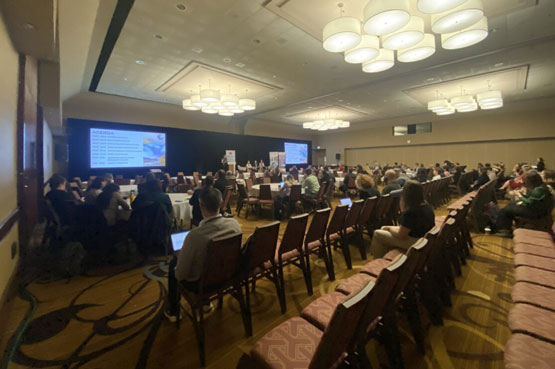
© Oceans Research in Canada Alliance (ORCA)
Introduction & Context
Established in 2016 in response to a need for a more coordinated approach to ocean research activities in Canada that was identified in a report from the Canadian Consortium of Ocean Research Universities (CCORU), the Oceans Research in Canada Alliance (ORCA) aims to help convene Canada's ocean science community to share knowledge and information, and to work collaboratively to increase our collective understanding of the ocean and to advance solution-based ocean technology and innovation.
Since ORCA’s establishment there have been several key events aimed at convening the ocean science and technology community in Canada, including Building an Oceans Research in Canada Alliance Workshop (2017), Creating a Culture of Successful Collaboration (2018), and Innovation and Technology Workshop (2019). In follow-up to these previous events, hosting a 2023 National ORCA Meeting was identified as a priority action by ORCA Council and had also been raised as a desirable activity to the ORCA Secretariat by ORCA members, particularly following the pandemic. In this context, the ORCA 2023 National Meeting aimed to build on previous work to enhance collaboration and to leverage ORCA to advance Canada’s contribution to the United Nations Decade of Ocean Science for Sustainable Development 2021-2030 (‘Ocean Decade’), a global initiative that aims to reverse the cycle of decline in ocean health and ensure a sustainable ocean for future generations through collaboration across all levels.
Under the theme, Together, let’s Build a Strong Canadian Contribution to the Ocean Decade, the ORCA 2023 National Meeting was held on June 1-2, 2023 in St. John’s, NL, in partnership with the Canadian Meteorological and Oceanographic Society (CMOS) Congress and Memorial University, and in tandem with the CMOS 57th Congress Connecting on the Rock: From the Marine Environment to the Blue Economy. ORCA 2023 aimed to showcase the diversity of the Canadian ocean community, provide a platform for sharing information, build on existing collaborations, and establish new partnerships. In addition, it provided an opportunity to increase awareness and support for Canada’s contribution to the Ocean Decade.
Over 150 people registered for ORCA 2023 and in addition over 375 CMOS delegates participated in person and online. ORCA 2023 attendees represented more than 80 organizations and 40% of participants identified as early career ocean professionals (ECOPs). The majority of ORCA 2023 programming was comprised of 15 concurrent sessions that were designed and executed by members of the ocean science community, with the format and approach designed by the session conveners. In addition, programming also included a poster session featuring 25 initiatives in ocean science and technology, a job fair in partnership with CMOS, and a demonstration of the Ocean, Freshwater, and Us Giant Floor Map and Augmented Reality (AR) experience led by the Canadian Ocean Literacy Coalition (COLC) and Ocean School. Lastly, ORCA participants and the public were invited to attend the launch event for Ocean Week Canada 2023, featuring a live concert by Newfoundland musical group “The Fortunate Ones”, hosted by COLC and partners.
The intent of this report is to provide a high-level summary of the ORCA 2023 National Meeting and does not necessarily reflect the perspectives of organizations and participants involved in the meeting or those members of the Canadian ocean community who were unable to attend. Content was largely provided by session conveners, who provided summaries of their sessions and, in some cases, next steps and/or opportunities for engagement.
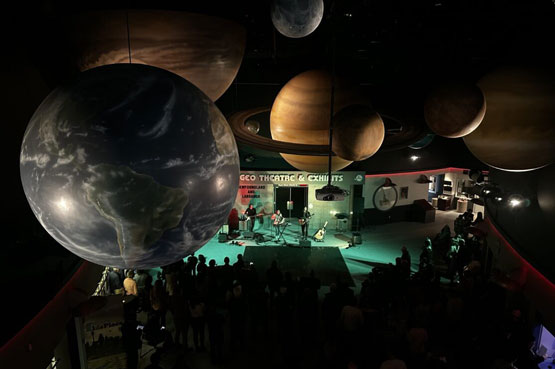
© Canadian Ocean Literacy Coalition
Overview of ORCA 2023 National Meeting
Plenary Session Programming
Participants to the ORCA 2023 National Meeting were welcomed by the ORCA Secretariat, represented by Andi White (Manager of International Science Initiatives and the ORCA Secretariat, Fisheries and Oceans Canada), who hosted the plenary session and invited a blessing by Inuk Elder Ellen Ford (Hunter) who serves as a Language Teacher and Elder Advisor for Indigenous Services at Memorial University.
Opening remarks were provided by ORCA’s co-chairs: Neil Bose (President and Vice-Chancellor pro tempore, Memorial University) and Arran McPherson (Assistant Deputy Minister, Ecosystems and Ocean Science, Fisheries and Oceans Canada), both of whom welcomed participants and emphasized the importance of working cooperatively and collaboratively to advance ocean science across Canada and with international partners. They also encouraged participants to take advantage of the diversity of programming and participants at ORCA 2023 to establish new connections, broaden their current knowledge base, and to help expand current projects and initiatives.
Plenary programming also included three invited presentations:
- Lisa Kalynchuck (Vice President of Research and Innovation, University of Victoria) provided an general overview of ORCA including the advantages of national cooperation, the strength of ORCA, and the benefits of ORCA membership;
- Anya Waite (Associate Vice-President Research (Ocean) of Dalhousie University and CEO/Scientific Director, Ocean Frontier Institute) provided an introduction to the Ocean Decade and Canada’s contribution to date, including highlights of her personal experiences and the engagement of her organization to date; and
- Samantha McBeth (Steering Committee Member of the Canadian Node of the Ocean Decade Early Career Ocean Professionals Program (ECOP-Canada)) highlighted the importance of engaging ECOP in ocean science initiatives and the benefits of doing so, and provided an overview of ECOP Canada’s activities to date.
An interactive panel discussion focusing on Collaborating for a strong Canadian contribution to the Ocean Decade was moderated by Paul Snelgrove (Memorial University/Ocean Frontier Institute). Panelists Eric Peterson (Tula Foundation), Neha Acharya-Patel (ECOP-Canada), Guillaume St-Onge (Université du Québec à Rimouski), and Diz Glithero (Canadian Ocean Literacy Coalition) spoke about their experiences in advancing domestic and international collaborative networks, with an emphasis on highlighting benefits, challenges, and their lessons learned, while drawing on specific examples with particular relevance from the Canadian ocean community and the Ocean Decade.
The discussion highlighted the emphasis on early career representation within the context of the UN Ocean Decade. It was recommended that organizations and entities reserve space for young professionals, to foster meaningful collaboration and to integrate the passion of youth-led movements into strategies for sustainable development. The establishment of a substantial Ocean Decade-focused funding program in Canada was also suggested to stimulate mobilization and collaboration across disciplines and to help address critical issues such as enhancing the country's capacity to conduct work at sea. These insights underscored the importance of advancing ocean literacy in Canada, where informed public understanding of the oceans and the reciprocal relationship with human activities plays a pivotal role in achieving effective ocean stewardship and sustainable decision-making.
Ocean Decade-themed Breakout Groups
Organized around the seven Ocean Decade Outcomes, and hosted by the Ocean Decade Champions with support from ECOP-Canada, seven breakout groups were held to share information about the Decade Outcomes, increase awareness of Canada’s contribution to date under each of the Outcomes, and generate discussions among participants to inform the work of the Champions and their networks moving forward. The breakout groups were held in two 45-minute time slots, and all attendees to ORCA 2023 were encouraged to attend two different sessions.
Although all breakout groups were different, there were some recurring general messages that were applicable across all Outcomes, including the need for indicators to assess progress and to define success; the importance of developing science-based solutions that address ocean issues and that can inform policy through innovative collaborations involving multisectoral and multidisciplinary teams; and the necessity of collectively working to advance equity, diversity, inclusion, and accessibility in ocean science to address systemic barriers to participation. In addition, the need to creatively raise public awareness and engagement in the Ocean Decade through ocean literacy and knowledge mobilization was highlighted. A summary of the discussions, including key next steps, from each breakout group is provided in Annex 1.
Sessions convened by ORCA Community Members
The ORCA 2023 National Meeting included 15 sessions convened by members of the ORCA community addressing themes such as interdisciplinary and multiregional collaboration, Indigenous engagement and partnerships, community-led initiatives, and mobilizing tools and resources. A brief summary of these sessions is provided below in alphabetical order based on session title.
Advancing Indigenous Partnerships in Ocean Science and Sustainability
Session conveners: Kes Morton (Pisces Research Project Management), Lindsay Carroll (Pisces Research Project Management), and Ken Paul (Member of Wolastoquey Nation)
The session was convened by partners participating in the Advancing Indigenous Partnerships in Ocean Science for Sustainability (AIPOSS) project, with nearly 40 participants in attendance. Topics discussed included strategies to demonstrate that traditional and Indigenous knowledge are valued by government and academic researchers (e.g., through appropriate compensation, relationship-building, co-development of research objectives), potential avenues to ensure that funding is more accessible to Indigenous communities, and best practices for engaging Indigenous communities in ocean research. It was emphasized that the development of meaningful and successful partnerships needs to happen in-person and in Indigenous communities, and should be based on the principles of sincerity, humility, intentional learning, and an openness to working through challenges.
Apoqnmatulti’k: Working Together for a Healthy and Resilient Ocean
Session conveners: Shelley Denny (Unama’ki Institute of Natural Resources (UINR)), Alanna Syliboy (Confederacy of Mainland Mi’kmaq (CMM)), and Maggie Sutherland (Ocean Tracking Network (OTN))
Guided by the Mi’kmaw principle of Two-Eyed Seeing, Apoqnmatulti’k offers a model for how the incorporation of diverse perspectives enhances knowledge, ensures transparency and accessibility of information, and has the potential to transform fisheries management and conservation. Through patience, dialogue, and by allowing the space for co-learning and co-development, Apoqnmatulti’k can support decision making and the stewardship of aquatic resources. Apoqnmatulti’k is a partnership among the Ocean Tracking Network, Unama’ki Institute of Natural Resources, Confederacy of Mainland Mi’kmaq/Mi’kmaw Conservation Group, Marine Institute of Natural and Academic Science, Acadia University, Dalhousie University, and Fisheries and Oceans Canada.
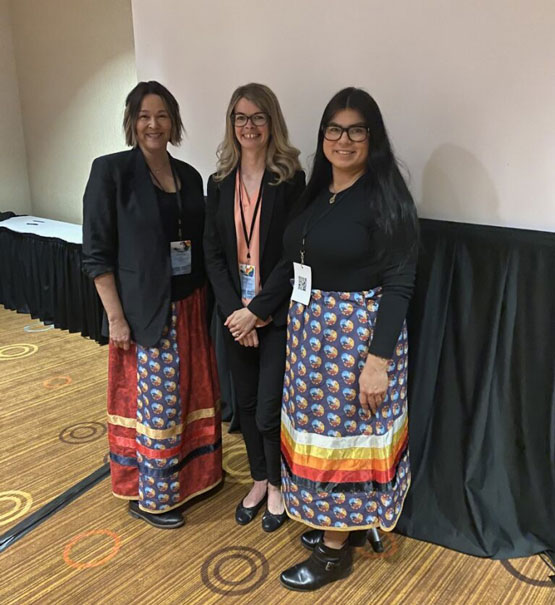
© Shelley Denny (Unama’ki Institute of Natural Resources (UINR)), Maggie Sutherland (Ocean Tracking Network (OTN)), and Alanna Syliboy (Confederacy of Mainland Mi’kmaq (CMM)).
Art-Science Symbiosis Workshop: Reach New Horizons by Integrating Art into your Science
Session conveners: Alexa Goodman (Marine Environmental Observation Prediction and Response Network (MEOPAR)), and Samantha Jones (University of Calgary)
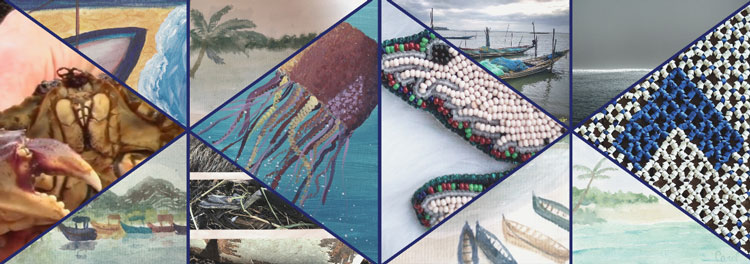
The Marine Environmental Observation Prediction and Response Network (MEOPAR) has been exploring the practice of science-art with the intention of inspiring future creations through their Art-Science Symbiosis Program. Co-developed by interdisciplinary scientist Samantha Jones, the activities under the program aim to engage and centre the science-art practices of diverse contributors. Participants in the workshop explored what science-art could look like in practice based on MEOPAR's Art-Science Symbiosis Program. Previous artwork pieces showcased at MEOPAR’s 2023 Annual Network Meeting inspired discussion of how artistic methods can be incorporated into science, and how art can be used to draw attention to research projects.
© Marine Environmental Observation Prediction and Response Network (MEOPAR).
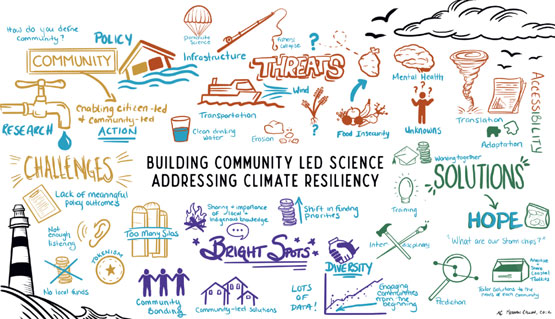
Building Community Led Science in Addressing Climate Resiliency: A Panel Discussion and Interactive Workshop on Coastal Community Resiliency under Canada’s Climate Science Plan 2050
Session conveners: Doug Wallace (Marine Environmental Observation Prediction and Response Network (MEOPAR)), and Alexa Goodman (MEOPAR)
Speaker: Kathleen Parewick (Municipalities of Newfoundland)
Panelists: Evan Andrews (Memorial University), Marc-Olivier Massé (Centre de recherche sur les milieux insulaires et maritimes (CERMIM)), Sepehr Khosravi (CLIMAtlantic), and Amanda Lim (Shorefast)
Approximately 40 people discussed how Canadian coastal communities are coping with and preparing for climate change impacts. A presentation on local climate change adaptation capacity was followed by a panel discussion that stressed the need to engage the right stakeholders and involve them in decision-making processes for effective policies and solutions. Participants highlighted existing strengths and bright spots in community-led science addressing climate change resilience, and discussed current challenges and future opportunities. In light of the increasing frequency and intensity of extreme events, the discussions called for adaptive solutions tailored to coastal communities’ unique contexts and needs and developed through shared understanding, meaningful collaboration, capacity building, and restorative justice.
© Meghan Callon, Canadian Ocean Literacy Coalition.
Collaboration Across the North Atlantic
Session conveners: Anya Waite (Dalhousie University), and Mike Smit (Dalhousie University)
The 90-minute session focused on major research programs across the North Atlantic, including the proposed North Atlantic Ocean Decade Collaborative Centre in partnership with the Hakai Institute. The session focused on discussing what collaboration across the North Atlantic looks like to the participants and what concrete actions they thought could be taken by 2030 regarding the North Atlantic. Resource, information, and knowledge sharing and strong communication were key themes, with inclusivity across a broad range of partners identified as necessary to be successful.
Community Hydrography
Session conveners: Michel Breton (Canadian Hydrographic Survey), Gabriel Montpetit Allard (Canadian Hydrographic Survey), and Annie Biron (Canadian Hydrographic Survey)
The one-hour information session about the new Community Hydrography program funded under the Government of Canada’s Oceans Protection Plan (OPP2) served to present the program’s values, objectives and guidelines. The presentation was followed by a dialogue between the audience and Canadian Hydrographic Service representatives. This served as a platform for exchange aimed at consolidating audience understanding, identifying general interest, establishing new contacts, and assessing potential program blind spots through audience feedback.
© Shutterstock.
Conserving Together for a Just Ocean
Session conveners: Evan J. Andrews (Memorial University), and Ratana Chuenpagdee (Memorial University)
Moderators: Evan J. Andrews (Memorial University), and Tara Howse (Atlantic Health Oceans Initiative)
Panelists: Ross Hinks (Miawpukek First Nation), Kimberly Orren (Fishing for Success), Sydney Sullivan (Atlantic Healthy Oceans Initiative), Amanda Lim (Shorefast), and Gemma Raynor (Oceans North)
The 90-minute panel discussion aimed to explore connections between marine conservation and justice by identifying linkages among themes such as ocean protection, ecosystem restoration, and food security. The panel was a dialogue among practitioners, community leaders, and scientists working, living, and researching in Newfoundland and Labrador. Panelists shared their visions of a just ocean and considered the barriers that needed to be addressed to advance justice, as well as potential solutions in light of changing coastal and ocean conditions. Many important themes emerged, including the need to involve women, youth, and marginalized groups in marine conservation and how transparency in decision-making is a key driver of a just ocean. Finally, the panel showcased that there is a strong push for better enabling and understanding of local action for marine conservation. All panelists highlighted that communities are well positioned to provide strong, creative, and pragmatic conservation solutions based in justice.
© Too Big To Ignore.
Decision Support System (DSS) on Microplastics and Nanoplastics in Canada’s Waterways
Session convener: Julien Cousineau (National Research Council (NRC))
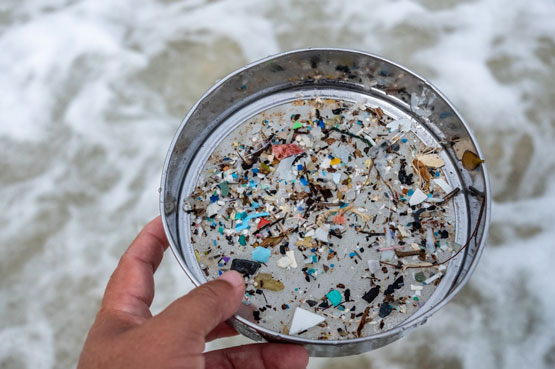
The 30-minute information session on a new National Research Council (NRC) initiative to address barriers to assess plastic pollution in Canada’s waterways promoted knowledge dissemination and explored potential opportunities for collaboration. The NRC is developing innovative technologies and methods to address the lack of field measured data, the absence of efficient and scalable monitoring technologies/methodologies for rapid quantification, and characterization of micro- and nano- plastics in aquatic environments. The initiative also aims to address the lack of accurate information in predicting accumulation zones and the pathways of plastic pollution in different marine environments.
A key outcome from this initiative will be the creation and launch of a digital, geospatial data platform, or Decision Support System (DSS). The DSS will leverage data from existing research and use state-of-the-art technology to monitor and predict the fate and movement of plastics in different Canadian water-based environments. The DSS will provide users a greater understanding of plastic pollution distribution and risks to Canada’s aquatic systems. The project includes the selection of pilot sites and the NRC is searching for partnerships with Indigenous communities and Canadian subject matter experts to collect water samples and laboratory analysis.
© Shutterstock.
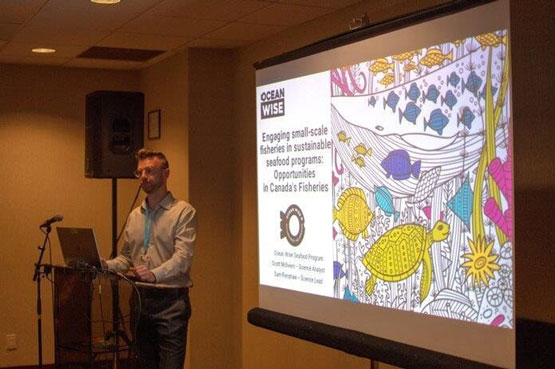
Engaging Small-Scale Fisheries in Sustainable Seafood Programs: Opportunities in Canada's Fisheries
Session conveners: Samantha Renshaw (Ocean Wise Fisheries and Seafood Initiative), and Scott McIlveen (Ocean Wise Fisheries and Seafood Initiative)
The purpose of the 90-minute session was to address the question of improving engagement and accessibility for small-scale Canadian producers in the sustainable seafood space. The session aimed to drive progress in areas of concern and foster collaboration in areas that may contribute to three of the Ocean Decade challenges: an accessible ocean, a productive ocean, and a healthy and resilient ocean. The following issues were identified by participants as priority areas for action: i) helping consumers identify where their seafood comes from; ii) facilitating relationship building and idea sharing with small-scale fishers; 3) enabling small-scale fisheries to be competitive in the marketplace; 4) reducing confusion around or oversaturation of eco-certifications in the market.
Potential ways to address each priority action area were identified, including establishing a global standard for clear and accessible labeling of seafood products, improved traceability from boat to consumer with involvement of small-scale fishers, facilitating relationship building and idea sharing with small-scale fishers, matching costs to the scale of the fishery (i.e. small-scale vs. large-scale), finding sustainable alternatives for small-scale fisheries, increasing representation in the market, and emphasizing consumer education and choice.
© Ocean Wise.
Fishing for Success: Why Fishing is the First Thing to Teach our Children in Order to Save the Ocean
Session convener: Kimberly Orren (Fishing for Success)
The 90-minute workshop session was hosted by Fishing for Success (F4S), a volunteer-based nonprofit social enterprise located in Petty Harbour, NL, that advocates for an inclusive, gender-equitable and sustainable small-scale fishery. The workshop included presentations, a panel discussion, and question and answer segments. F4S partners with other nonprofits to provide free or reduced-cost programming for women, children, youth, newcomers, and Indigenous community members who typically experience barriers to entering the commercial or recreational fisheries in order to “Build a Strong Canadian Contribution to the Ocean Decade.” Through anecdotal evidence and stories shared by F4S’s volunteers and program participants, the workshop demonstrated that teaching youth, women, and others to fish enables these groups to envision a more inclusive and equitable society and a more sustainable world.
Integrating Canadian Predictive Modelling Activities: A Panel Discussion with MEOPAR, CONCEPTS, and CoastPredict
Session conveners: Doug Wallace (Marine Environmental Observation Prediction and Response Network (MEOPAR)), and Paul Myers (University of Alberta and Chair of Canadian National Committee for the Scientific Committee on Oceanic Research - SCOR)
This session focused on collaborations among Canadian ocean numerical modeling groups. As part of the session, the conveners presented the Ocean Decade-endorsed CoastPredict Initiative and discussed linkages with other Decade-endorsed international prediction activities. Afterward, the presentation shifted to another Decade-endorsed activity, Future Coastal Ocean Climates (FLAME) that was presented by Anna Katavouta, an ECOP from the National Oceanographic Centre, Liverpool, United Kingdom. Finally, the session reviewed the collaboration between the Canadian Operational Network of Coupled Environmental PredicTion Systems (CONCEPTS) and MEOPAR's Prediction Core in the Nucleus for European Modeling of the Ocean (NEMO) modeling. This led to an open discussion about how to move these efforts forward with a conclusion that there was general agreement among session participants that further discussion was needed on these topics.
Mobilizing Environmental DNA Tools for Understanding Ocean Biodiversity and Tracking Change
Session conveners: Caren Helbing (University of Victoria) and Neha Acharya-Patel (University of Victoria)
Speakers: Caren Helbing (University of Victoria), Dave Côté (Fisheries and Oceans Canada), Nicole Fahner (Center for Environmental Genomics Applications), and Michelle Saunders (Nunatsiavut Council Government)
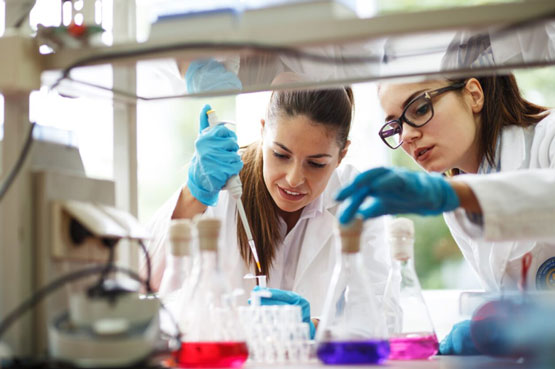
The session sought to introduce participants to environmental DNA (eDNA) potential, showcase Canada’s leadership in eDNA standards development and resource generation, and demonstrate how to use eDNA methods accessibly and effectively in the marine environment. A panel discussion included perspectives from academia, government, industry, and Indigenous representatives, with panelists highlighting their expertise and experience with eDNA in relation to its application in Canada’s oceans. The session featured a diverse range of viewpoints and insights from interdisciplinary panelists, and the audience was lively and engaged in the discussion. The interest and excitement surrounding marine eDNA application in Canada was evident from the level of engagement of participants.
© Shutterstock.
Ocean Technology Enabling the Transition to a Blue Economy
Session conveners: Innovation, Science and Economic Development (ISED) Canada, National Research Council (NRC) Canada, and Atlantic Canada Opportunities Agency (ACOA)
Moderator: Paul Brett (Fisheries and Marine Institute, Memorial University)
The overarching theme for this session was to demonstrate how the Ocean Decade provides opportunities that directly align with the work of industry and academic innovators, and how collaboration will help advance the technologies needed for a transition to a more sustainable blue economy. The session brought together approximately 30 attendees and included a panel of leaders in industry, and academia who discussed opportunities for Canada to lead in the transition to a sustainable blue economy.
The Ocean Innovation Hub of the Fisheries and Marine Institute, a new cutting-edge facility, will provide the required infrastructure and space to help spur collaborations between industry, academia, and government that will also be coupled with Institute’s applied research in the ocean space. The importance of Indigenous participation in an inclusive blue economy was emphasized and the work of Ocean Supercluster regarding Indigenous engagement including some of the programs such as the Indigenous Career Pivot Program and the implementation of the Two-Eye Seeing initiative were highlighted. The importance of virtual training for addressing safety issues in the marine sector was also stressed. The Qanittaq Clean Arctic Shipping project, which recently secured $91.5M from the Canada First Research Excellence Fund (CFREF), was presented as a tangible example of broad collaboration between academia, industry, Indigenous groups, and governments to address the salient issues regarding Arctic shipping.
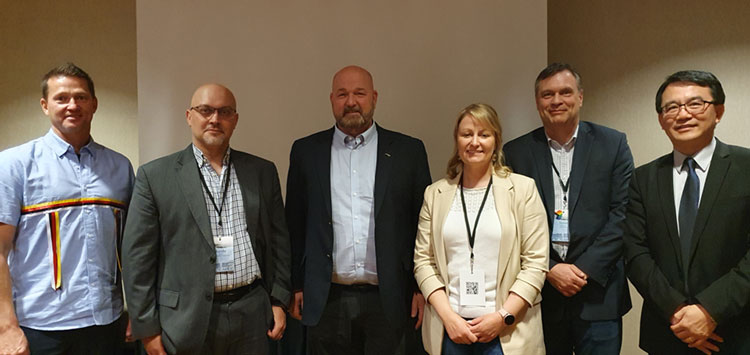
Photo (L to R): Ralph Eldridge, Canada’s Ocean Supercluster; Dr. Randy Billard, Virtual Marine; Dr. Paul Brett, Fisheries and Marine Institute (Memorial University); Kelley Santos, Fisheries and Marine Institute (Memorial University); Steve Kavanagh, ISED Canada; and Dr. Wei Qiu, Memorial University. © ISED, NRC and ACOA.
Selling Saving the Ocean: Re-branding the Big Blue to Engage the Next Wave of Eco-conscious Consumers
Session convener: Amanda Horn (Loless Blue Beauty; Sustainable Ocean Alliance)
This session was focused on the value of ocean literacy and aligned to UN Ocean Decade Challenge 7: an Inspiring and Engaging Ocean. Attendees in the session emphasized the need for collaboration between marketers, scientists, and conservationists, including the importance of mentorship and intergenerational knowledge exchange. Attendees were encouraged to reflect on their personal and professional connections to aquatic environments, highlighting a key opportunity in promoting positive water wellness experiences and the connection between our health as humans and our world's bodies of water. The discussion covered four key components: i) uncovering the current human-ocean disconnection; ii) defining the role of branding, marketing and storytelling in the ocean, water wellness and conservation space; iii) a framework for building better businesses that balance positive ocean impact and profit; and iv) lessons and advice on personal branding and navigating the ocean space as an early career professional. Amanda Horn of the Sustainable Ocean Alliance is actively calling on Ocean Leaders and Water Lovers to join her community We Are Bodies of Water, which provides a platform for mentorship, media, and knowledge exchange.
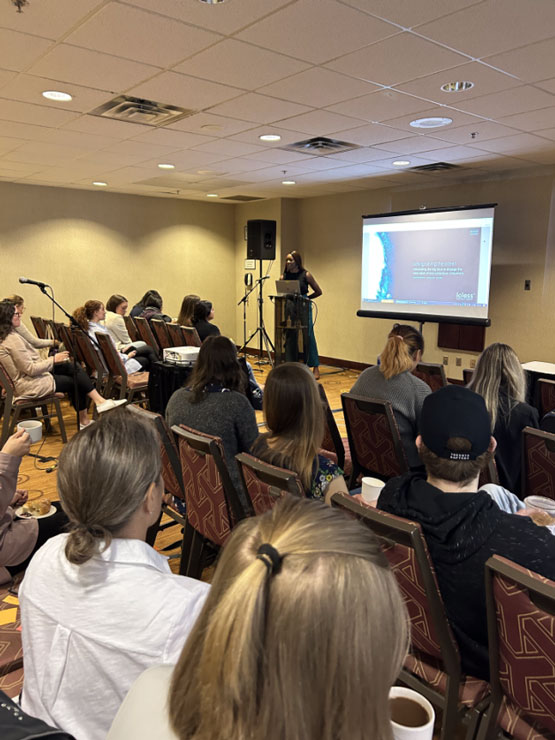
© Loless Blue Beauty.
The Vessels we Want for the Science we Need: A Canada-wide Perspective on Vessel Capacity Needs to Science
Session conveners: Doug Wallace (Marine Environmental Observation Prediction and Response Network (MEOPAR); National Research Vessel Task Team (NRVTT), and Alexa Goodman (MEOPAR))
Moderator: Doug Wallace (MEOPAR; NRVTT)
Panelists: Alexandre Forest (Amundsen Science), Heather Reader (Canada Research Chair in Chemistry of the Ocean and Atmosphere, Department of Chemistry Memorial University), Guillaume St. Onge (Institut des sciences de la mer de Rimouski (ISMER) de l’Université du Québec à Rimouski (UQAR)), Marc Olivier Masse (Centre de research sur les milieux insulaires maritimes (CERMIM)), and Benoit Pirenne (Ocean Networks Canada)
The panel discussion addressed the scientific vessel capacity needs in Canada. The discussion involved 50 stakeholders from the ocean research community and focused on future opportunities and requirements for vessel access. The panelists represented various sectors and regions in Canada and shared their perspectives on the vessels needed for scientific research. Challenges related to vessel access were discussed, including issues with applications, funding, and aging ships. Possible solutions were proposed, such as leveraging government grants, creating partnerships between academia and government agencies, and providing training opportunities for researchers. The importance of international collaborations and coordination with other interested groups was also emphasized. The session concluded by encouraging participants to join the National Research Vessel Task Team (NRVTT) to contribute to finding solutions for scientific vessel needs. Learn more about the session outcomes in the full “What We Heard” Report.
© Shutterstock.
Conclusions & Next Steps
ORCA 2023 National Meeting was successful in bringing the Canadian ocean science and technology community together to collaborate, share ideas and information, and providing the opportunity to create new partnerships while building on existing ones. The diversity and expertise within the ORCA community is well-positioned to take advantage of existing opportunities and identify new ones that can be actioned to support Canada’s contribution to the Ocean Decade, while at the same time advancing cooperative, innovative partnerships and outcomes in ocean science in Canada that will endure beyond 2030. Moving forward, participants were encouraged to actively engage in the Ocean Decade and support the Canadian contribution to this global initiative by connecting with the Ocean Decade Champions and to leverage the Decade to help advance their own initiatives, projects, ideas, and interests.
ORCA 2023 demonstrated that anchoring national meetings to large thematic conferences is advantageous to reduce travel costs for some participants and to enhance synergies across various related disciplines, with a note that ensuring diverse programming is essential to make multisectoral connections and to encourage broad collaboration. Furthermore, the substantial proportion of ECOP in attendance indicates a desire by that portion of the community to take advantage of opportunities to meet and exchange information and ideas with the ocean community at-large, which could be an avenue to explore further within ORCA.
“The diversity and expertise within the ORCA community is well-positioned to take advantage of existing opportunities and identify new ones that can be actioned to support Canada’s contribution to the Ocean Decade.”
Members of the Canadian ocean science community can connect with the ORCA Secretariat for assistance in coordinating and/or promoting collaborative initiatives and for support in seeking formal Ocean Decade endorsement from the Intergovernmental Oceanographic Commission for projects, events, and other activities.
Ocean Decade Champions were encouraged to engage their networks with ORCA Council members and session leads, as appropriate and based on their interest, in future activities that will aim to provide support to advance and promote their activities whilst simultaneously supporting a strong Canadian contribution to the Ocean Decade.
Members of the ocean science and technology community were invited to explore ORCA’s content on its website, to share information and connect with other ocean professionals through the community of practice platform on SharePoint, and to receive the latest news and updates through ORCA’s social media and the ORCA Presents: Ocean Decade Newsletter.
Moving forward, participants are encouraged to stay engaged with the Canadian ocean community, through the coordination of events and activities to raise awareness and collaboration on high-interest and cross-cutting topics in ocean science and technology.
Acknowledgements
The ORCA Secretariat extends its gratitude to the individuals and teams who contributed to bringing the ORCA 2023 National Meeting to fruition. This event's success stands as a testament to the collaborative efforts of numerous contributors, each pivotal in shaping the event's conception, execution, and impact.
We extend our appreciation to the Canadian Meteorological and Oceanographic Society (CMOS), and Memorial University (MUN) for their partnership and financial support for ORCA 2023. We would also like to express our sincere gratitude to plenary speakers and panelists, session conveners and poster presenters, and all members of the ocean science and technology community who significantly enriched the depth and diversity of the discussions.
Furthermore, we wish to acknowledge the commendable efforts of the ORCA Council members, Ocean Decade Champions, ECOP Canada members, volunteers, and the technical support and event coordination team.
| Ocean Decade Outcome | Overview | Key Takeaways | Next Steps |
|---|---|---|---|
|
A Clean Ocean Convener: Ocean Wise with support from Sophia Olim |
|
|
|
|
A Healthy and Resilient Ocean Convener: Paul Snelgrove with support from Cassandra Konecney |
|
|
|
|
A Productive Ocean Convener: Kent Smedbol with support from Marie Egert |
|
|
|
|
A Predicted Ocean Convener: Jonathan Kellogg with support from Alexa Goodman |
|
|
|
|
A Safe Ocean Convener: Mark Abrahams and Jean Holloway with support from Samantha McBeth |
|
|
|
|
An Accessible Ocean Convener: Guillaume Morrissette with support from Kitty Kam |
|
|
|
|
An Inspiring and Engaging Ocean Convener: Lisa (Diz) Glithero with support from Neha Acharya-Patel |
What does success look like?
|
Challenges
|
|

© ECOP Canada.
Annex 2: ORCA 2023 Poster Session Contributions
Advanced Benthic Survey Tools for Marine Science: A Workshop Initiative to Facilitate Science and Enhance Collaborations in Canadian Seafloor Research
Bárbara de Moura Neves (Fisheries and Oceans Canada), Tammy Norgard (Fisheries and Oceans Canada), Alexandre Forest (Amundsen Science), Douglas Bancroft (Canadian Scientific Submersible Facility), and Paul Snelgrove (Memorial University)
Amundsen Science
Alexandre Forest (Amundsen Science)
Blue Carbon Dynamics in Canada’s Coastal National Parks
Marlow G. Pellatt (Parks Canada), Yulun Wu (Parks Canada, University of Ottawa), Adam Collingwood (Parks Canada), Karen Kohfeld (Simon Fraser University), Abby McCarthy (Simon Fraser University), Lauren McNeilly (Simon Fraser University), Rebecca Dodge (Simon Fraser University), Holly Easton (Parks Canada), Alison Cassidy (Parks Canada), Gail Chmura (McGill University), and Karen Richardson (Parks Canada)
Canada’s Contribution to the International BioGeoScapes Program
Heather Reader (Memorial University), Carolyn Buchwald (Dalhousie University), Erin Bertrand (Dalhousie University), and Maite Maldonado (University of British Columbia)
Canada's Oceans Now
Katherine Middleton (Fisheries and Oceans Canada)
Canadian Coastal Climate Risk Information System
Julien Cousineau (National Research Council Canada)
Canadian Marine Shipping Risk Forum (CMSRF) – Get On Board with the Canadian Shipping Community of Practice!
Ronald Pelot (Dalhousie University) and Meghan Mathieson (Clear Seas Centre for Responsible Marine Shipping)
Connecting Researchers and Practitioners: A Community of Practice for Canadian Coastal and Marine Risk Communication
Joel Finnis (Memorial University), Ronald Pelot (Dalhousie University), Amber Silver (University at Albany), and Cindy Marven (Community of Practice for Canadian Coastal and Marine Risk Communication)
Conservation Planning in Cape St. Mary's and Witless Bay, Newfoundland
Mikaila Bickford (Canadian Parks and Wilderness Society - Newfoundland and Labrador Chapter (CPAWS NL)) and Sofia Karabatsos (Canadian Parks and Wilderness Society - Newfoundland and Labrador Chapter (CPAWS NL))
Early Career Ocean Professional Landscape in Canada: Needs, Beliefs and Ideas
Neha Acharya-Patel (ECOP Canada), Samantha McBeth ECOP Canada, Ronnie Noonan-Birch ECOP Canada, and Ashley Bowes ECOP Canada
Enabling Visualization and Access of Ocean Data to Broad Audiences via the Ocean Navigator
Justin Elms (Fisheries and Oceans Canada)
Improving Equity, Diversity, Inclusion, and Accessibility (EDIA) in Canada’s Weather, Water and Climate Workforce
Karen Smith (University of Toronto), Alexa Goodman (Marine Environmental Observation, Prediction and Response Network (MEOPAR)), and Jim Abraham (Canadian Meteorological and Oceanographic Society (CMOS))
Insights from Early Career Ocean Professionals on the Ocean Decade
Neha Acharya-Patel (ECOP Canada) and Samantha McBeth (ECOP Canada)
Knowing Where We Stand: Supporting Climate Change Adaptation on the Southern Shore
Kathleen Parewick (Municipalities Newfoundland and Labrador), Bradley Power (Municipalities Newfoundland and Labrador), Deatra Walsh (Municipalities Newfoundland and Labrador), Ifeoluwa Fisayo Agunbiade (Memorial University), Noman Ahmed (Memorial University), Malaya Ashem (Memorial University), Chinonso Eddy-Ugorji (Memorial University), Stephen Enejo (Memorial University), Muhammad Haris (Memorial University), Ming Y. Lee (Memorial University), Siddhartha Shakya (Memorial University), Bing Chen (Memorial University), Baiyu Zhang (Memorial University), Yuanmei Zhang (Memorial University), and Darin Brooks (College of the North Atlantic)
MEOPAR's Marine-Focused Communities of Practice Make Lasting Impacts Through Science Communication, Public Engagement and Knowledge Sharing
Alexa Goodman (Marine Environmental Observation, Prediction and Response Network (MEOPAR))
Moving Together for Marine Conservation: Gauging Interest
Evan Andrews (Memorial University) and Ratana Chuenpagdee (Memorial University)
National Research Council’s Ocean Program
Carlos Levy (National Research Council), Marie-Chantal Ross (National Research Council), and Lawrence Mak (National Research Council)
Ocean Allies
Kyryn Swanson (Pisces Research Project Management (RPM) Inc.), Lindsay Carroll (Pisces Research Project Management (RPM) Inc.), and Kes Morton (Pisces Research Project Management (RPM) Inc.)
Canada and the Ocean Decade
Marie-Elaine Boivin (Fisheries and Oceans Canada) and Amanda Madro (Fisheries and Oceans Canada)
Ocean Networks Canada- Contributions to the UN Decade of Ocean Science
Benoît Pirenne (Ocean Networks Canada)
Science Art-Symbiosis
Alexa Goodman (Marine Environmental Observation, Prediction and Response Network (MEOPAR))
The Interplay of Ocean Science Research with Public Policy and Management Decision Making: Seeking Solutions
Kristin M. Poduska (Memorial University), Sandra Toze (Dalhousie University), Isabelle Caron (Dalhousie University), Philippe Mongeon (Dalhousie University), Ian G. Stewart (Dalhousie University), Rémi Toupin (University of King’s College), and Bertrum H. MacDonald (Dalhousie University)
The Vessels Needed for the Science Wanted: The Role of the National Research Vessel Task Team (NRVTT)
Doug Wallace (Marine Environmental Observation, Prediction and Response Network (MEOPAR))
Vitality
Kes Morton (Pisces Research Project Management (RPM) Inc.), Kyryn Swanson (Pisces Research Project Management (RPM) Inc.), and Lindsay Carroll (Pisces Research Project Management (RPM) Inc.)
2J3KL Northern Cod Fisheries Improvement Project
Association of Seafood Producers/Atlantic Groundfish Council
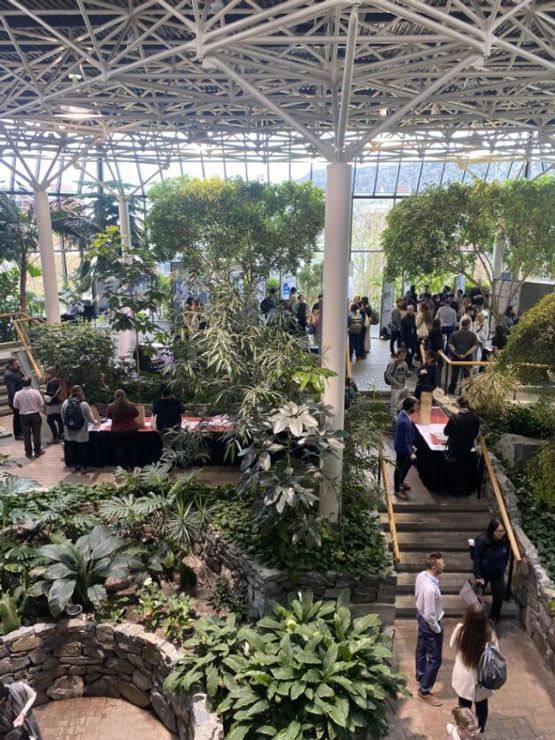
ORCA 2023 National Meeting Poster Session. © ORCA.
Join Us
Contact the Oceans Research in Canada Alliance (ORCA) Secretariat to join members of the ocean science and technology community from across Canada that are already part of ORCA.
Together, we can advance our collective understanding of the ocean!
ORCA Secretariat
200 Kent Street, Ottawa, ON, K1A 0E6
Webpage: Oceans Research in Canada Alliance
Email: dfo.orca-aroc.mpo@dfo-mpo.gc.ca
Twitter: CanOceanSci (@CanOceanSci) / X (twitter.com)
LinkedIn: CanOceanSci (@CanOceanSci) / LinkedIn