
February 2025 | Canadian Food Inspection Agency | by Kelvin Chau and Bethany Staye
Frozen breaded chicken products, like chicken nuggets and fingers, are commonly found in Canadian households. They’re quick, easy, and loved by kids and adults alike. But behind these convenient foods is a story of science and safety.
The Canadian Food Inspection Agency (CFIA), working closely with government partners, such as the Public Health Agency of Canada, used innovative technology to identify the cause of recurring Salmonella illness outbreaks in Canada. As a result, the CFIA implemented a food safety requirement for food businesses that make frozen raw breaded chicken products, which resulted in a remarkable 23% reduction of all Salmonella-related illnesses that typically occur every year across Canada. Here’s how it happened.
Not all chicken is the same
Before April 2019, many frozen chicken nuggets and similar products sold in grocery stores were raw—made of ground or minced raw chicken meat that was breaded, surface-fried, and frozen. The surface frying and the consistency of the meat gave the products a "cooked" appearance, which often misled consumers. Additionally, although product labels were required to have clear cooking instructions, consumers were not always following them. While the chicken may have looked “ready to eat”, it was not. It turned out that these products were a leading cause of Salmonella illnesses in Canada, posing a serious public health concern.
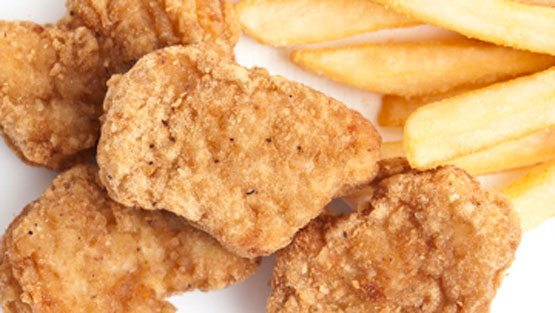
Frozen breaded chicken products, like chicken nuggets and fingers, are commonly found in Canadian households. They’re quick, easy, and loved by kids and adults alike
Salmonella are bacteria commonly found in the intestines of animals and in the environment that can cause a disease called salmonellosis. Infection by some types of Salmonella, known as nontyphoidal Salmonella, are a leading cause of gastrointestinal illness, responsible for an estimated 87,510 food-related illnesses, 925 hospitalizations, and 17 deaths in Canada each yearFootnote 1. Salmonellosis is a nationally notifiable disease in all provinces and territories. Cases are reported to provincial or territorial departments of health, and to the federal government if they meet specific criteria.
A joint effort to zero in
To understand why Canadians were getting sick, between 2017-2019, the CFIA and PHAC worked together to trace, test, and find the source of illnesses and outbreaks. In May 2017, Government of Canada scientists began using a new technology called whole genome sequencing (WGS) to help identify and respond to outbreaks. Previously, Canadian public health laboratories used pulsed-field gel electrophoresis for identifying foodborne illness outbreaks in Canada. WGS, however, allows for better identification of the link between each case of illness, and between cases of illness and the food source. Using the enhanced accuracy of WGS, between 2017 and 2019, federal, provincial and territorial health and food safety partners identified and investigated 16 multi-jurisdictional outbreaks and were able to link them to frozen raw breaded chicken products.
Taking action to improve food safety
Recognizing the unique food safety risks with certain frozen raw breaded chicken products and the need for an industry-wide solution, the CFIA published a new policy in 2018 requiring all manufacturers to implement process controls by April 1, 2019, to reduce Salmonella to undetectable levels in finished products sold in stores. The policy requires producers to meet strict safety standards for certain frozen breaded chicken products, either by fully cooking the products or by ensuring there are no detectable levels of Salmonella in the products. This proactive approach highlights how scientific research and evidence can be translated into effective policies that benefit everyone.
A study published in Epidemiology and Infection reported that this CFIA requirement has resulted in an estimated 23% reduction of all nontyphoidal Salmonella illnesses that typically occur every year across Canada. “This success story exemplifies how collaboration between Health Canada, PHAC and CFIA, innovative technology (such as the systematic use WGS), and a strong commitment to food safety delivered an extraordinary outcome” says Isabelle Laberge, Senior Director of the Food Safety Division in Policy and Programs Branch at the CFIA.
Why this matters
Salmonella infections can cause symptoms like diarrhea, fever, and stomach cramps, and in severe cases, hospitalization or death. Some people are at higher risk of serious illness including:
- children 5 and under
- adults 60 and over
- people who are pregnant
- people with weakened immune systems
Some people may be infected with the bacteria and not get sick or show any symptoms. However, they can still spread the infection to others. Preventing these infections not only keeps people healthier but also reduces the strain on healthcare systems. The success of CFIA’s policy demonstrates the critical role of science in guiding public health decisions and creating meaningful change.
How you can stay safe
While this CFIA requirement has made a big difference, it is important to follow safe food handling and cooking practices when preparing raw poultry at home, including certain frozen breaded poultry products that can still be sold raw (for example, if they are made of intact whole muscles). Here are some tips to keep your family safe:
Clean
- Wash your hands thoroughly with soap and warm water for 20 seconds before and after touching raw chicken.
Separate
- Use separate plates, cutting boards and tools when handling raw chicken
- Prevent cross-contamination: keep raw chicken separate from other foods, utensils, and surfaces
Cook
- Check the label:
- follow the cooking instructions carefully
- use a digital food thermometer to ensure the internal temperature reaches at least 74°C (165°F)
- insert the thermometer through the side of the chicken, all the way to the middle
- check each piece separately
- don't use a microwave to cook the breaded chicken since microwaves heat food unevenly, which means some parts of the chicken may be undercooked
Chill
- Refrigerate leftovers at or below 4ºC (40ºF) within 2 hours or sooner if they are in a warm location
- Use refrigerated leftover cooked chicken within 3-4 days or freeze for 4-6 months
- Follow safe food storage guidance in Storing leftovers to help save money and decrease food waste
Looking Ahead
The reduction in Salmonella cases is a testament to CFIA’s commitment to protecting Canadians. Researchers and policymakers continue to monitor foodborne illness trends and explore new ways to improve food safety. Advances in technology, such as whole genome sequencing, are helping scientists better track and respond to outbreaks, paving the way for even safer food systems in the future.
Frozen breaded chicken is an everyday food we can now enjoy with greater peace of mind, thanks to science-driven policies. Together, we’re creating a safer Canada for everyone.